- roleDesigner and developer
- toolsFigma, Astro, Typescript, PostgreSQL (Supabase)
- urlorgulloypostales.es
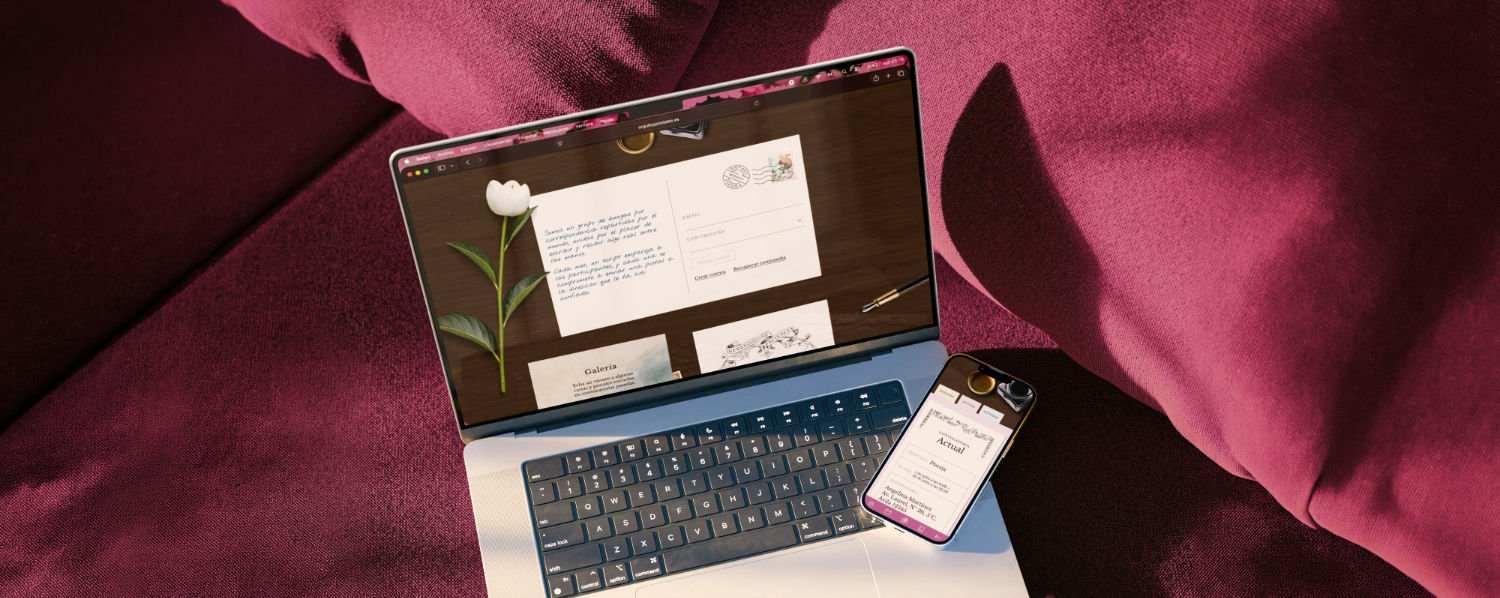
Orgullo y Postales
Orgullo y Postales ('Pride and Postcards', in a nod to Pride and Prejudice by Jane Austen) is a non-profit community whose members send each other handwritten postcards through the ordinary post.
Concept
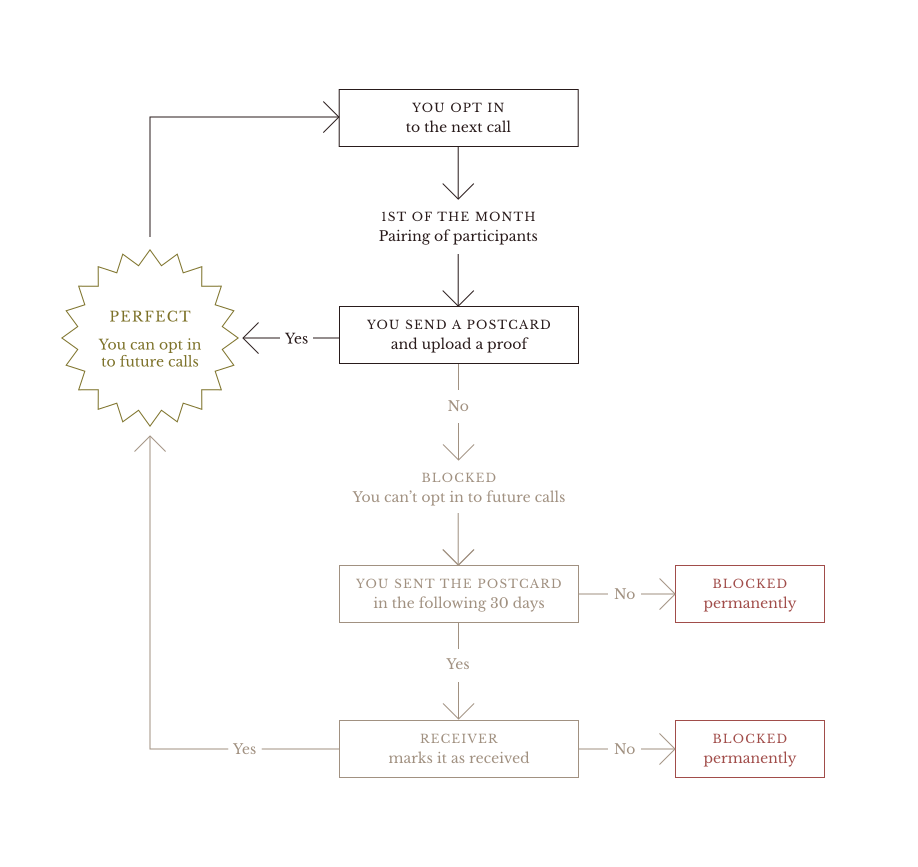
Participation in Orgullo y Postales runs on a monthly cycle. Members opt in to each open call in advance. On the 1st of the month, the call starts and all participants are paired in a circle: you are assigned one recipient, and someone else is assigned to you.
Then, members must write a postcard, post it, and upload a photo as proof of sending before the end of the month. Not sending the postcard blocks the user permanently: a severe product decision that guarantees a community built on trust and accountability.
To date, the community has exchanged more than 600 postcards across Spain.


Iterative process
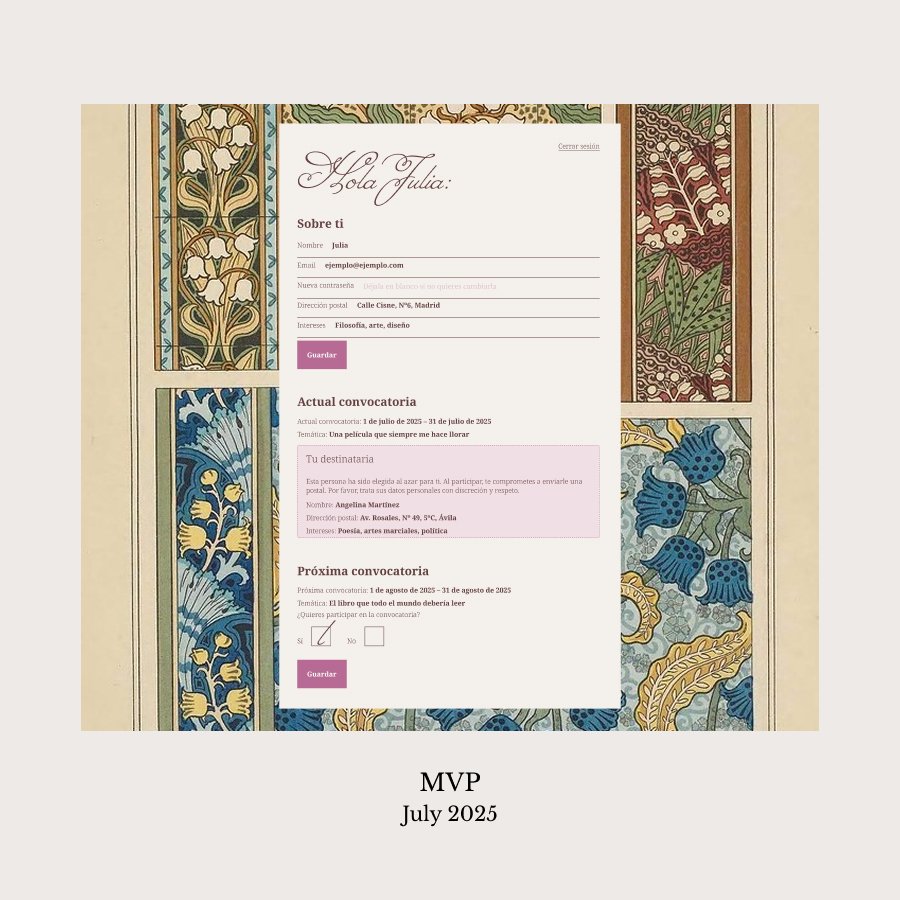
Orgullo y Postales started by chance, as an idea in a group chat. I knew I had to build on the momentum before people lost interest, so my priority was to create something quickly to retain them. Ten days later, the MVP was a simple page that allowed users to register, join a call, and receive their recipient's address.
I approached it with an agile mindset: after each call, I would gather feedback and iterate on both the interface and the logic. By the fourth month, the participation system felt satisfying to its members.
The current site is the third act: in June 2026, the project had proved it would last, so it deserved a rebuild with a proper data model and design system. I designed and led all of it, using AI as an implementation partner.
The brand world
Two concepts are the guiding threads behind every decision.
No. 1: The Regency period. The name Orgullo y Postales (Pride and Postcards) is a nod to Pride and Prejudice, the novel by Jane Austen. This was the name of the original group chat, so I used it as the spark for the identity. The brand embraces this period: from the typography to the ornaments. For instance, every illustration is hand-drawn by me, in the engraving style of early 19th-century commercial print.
Paper stamps are an intentional anachronism: they were invented a couple of decades later. However, I found that stamps were a necessary visual cue to explain the nature of the project to new visitors.
No. 2: Analog experience. The interface resembles an actual desk with tangible objects such as an inkwell, pressed flowers and stamps. The login screen is a postcard in which the user's credentials go where the address block belongs. Other UIs resemble printed forms that users fill in with their own handwriting.
Data model
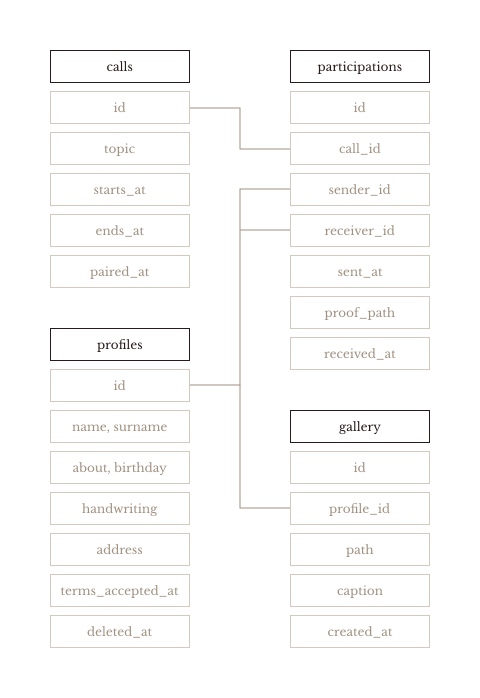
Participations are the spine of the data model: when users opt in to a new call, they create a 'participation'. It holds the call ID, who writes to whom (once the pairing is done), when the postcard was sent, the proof photo, and whether the recipient confirmed it. Almost every rule in the product is a question asked of that one table.
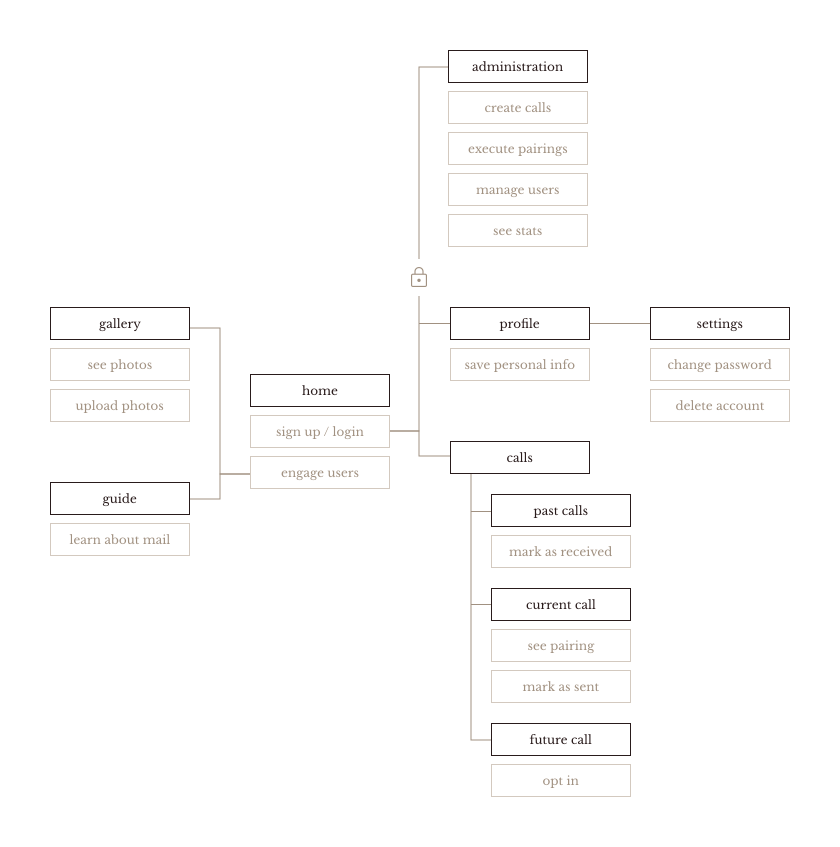
The interface is organized around where you are in the cycle of calls: what is happening now, what is coming, what has already happened.
Security and privacy
The entire mechanism of this project relies on a very delicate matter: real postal addresses shared with strangers. The most important design decisions of this project were about managing them with care.
An address becomes visible only when the month's pairing is made and disappears when the postcard is sent. The grace period can add an additional month of visibility. From a technical standpoint, access to private data is restricted by RLS policies in the database. I also made sure to comply with the General Data Protection Regulation (GDPR), guided by a specialized lawyer.
Two additional decisions address the same concern from a cultural point of view: a form to report users and inappropriate behavior, and the request for 'Discreción y respeto' (Discretion and respect) in the instructions given to users.
Design system: Typography
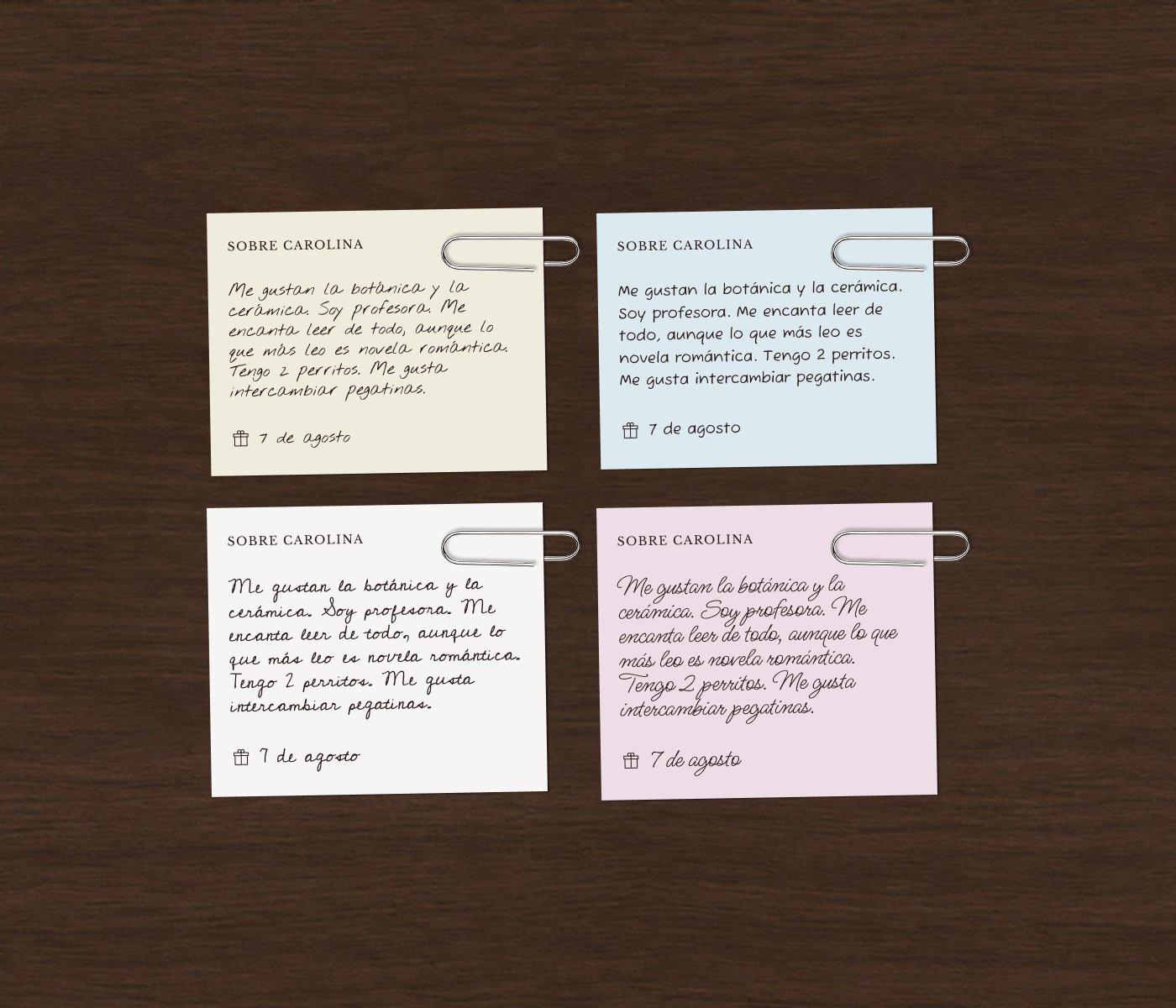
The UI combines different fonts following a clear logic: anything the system prints is set in the serif face, and anything a member writes appears in a handwriting face.
The printed voice is Libre Baskerville. The original was cut around 1757 and was the first step towards the modern faces that English printing adopted in Austen's era. The Libre version keeps that voice while being legible on screens (and open source).
For the handwriting, users can choose one of four options: elegant, round, schoolbook and romantic.
Design system: Components
The website is built using reusable components in the language of stationery.
The one I am most attached to is YesNo. Instead of a toggle or a simple checkbox, here you hand-draw a circle as your answer, the way you would on a paper form.
Buttons were the only component that did not have an equivalent in printed media, so I used a subtle shadow animation to create a three-dimensional effect, making sure they looked intuitively interactive.
Reach and adoption
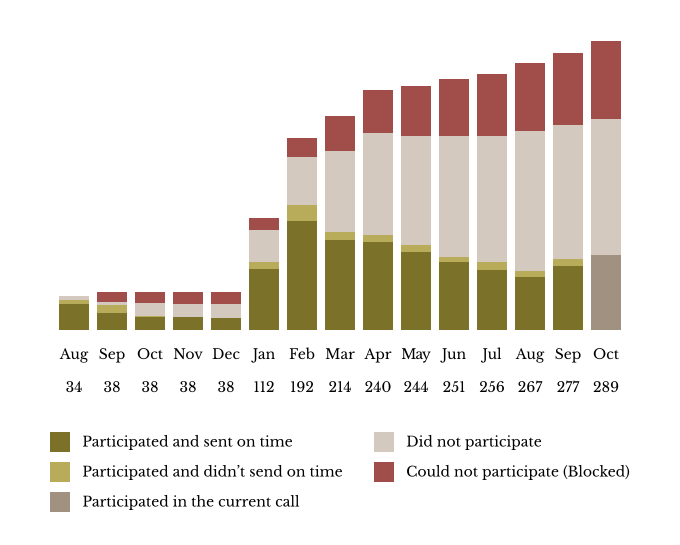
For the first few months, this was a very small circle: barely 13 active participants by the end of November 2025.
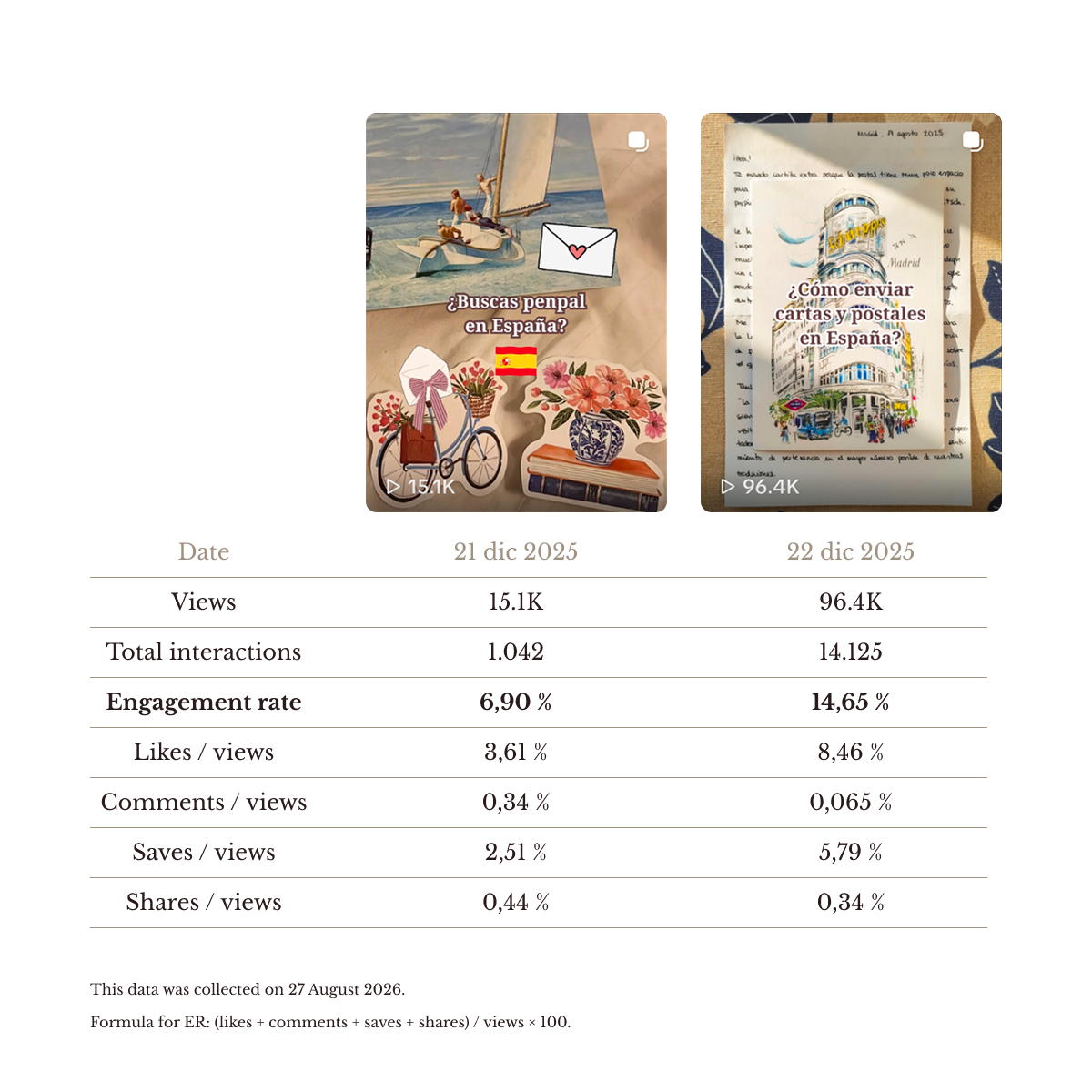
Then I made two TikToks. The first was a photo gallery walking through how the site worked. The second was actually valuable for viewers: it explained how to send a letter (featuring a link to the site on the final slide). This second TikTok went viral, and the effect was immediate. The community grew by 500% in just two months, and has maintained a steady growth rate since.
That said, the greatest number for me is that 90% of the users who participate in calls take the time to step outside, buy a postcard, write something on it, and queue at the post office, all for a complete stranger. And this has happened more than 600 times to date.